How NCS Colors Elevate Metal Chain Curtains in Contemporary Interior Design
In contemporary commercial interiors, material selection alone no longer defines spatial quality. Designers are increasingly required to orchestrate environments where color, light, and movement work in harmony. Yet, a critical gap persists the lack of structured color integration within dynamic materials.
Metal chain curtains ranging from aluminum link systems to decorative ring mesh have evolved into sophisticated architectural features. However, without a precise color strategy, their reflective nature can lead to visual inconsistency and uncontrolled glare.
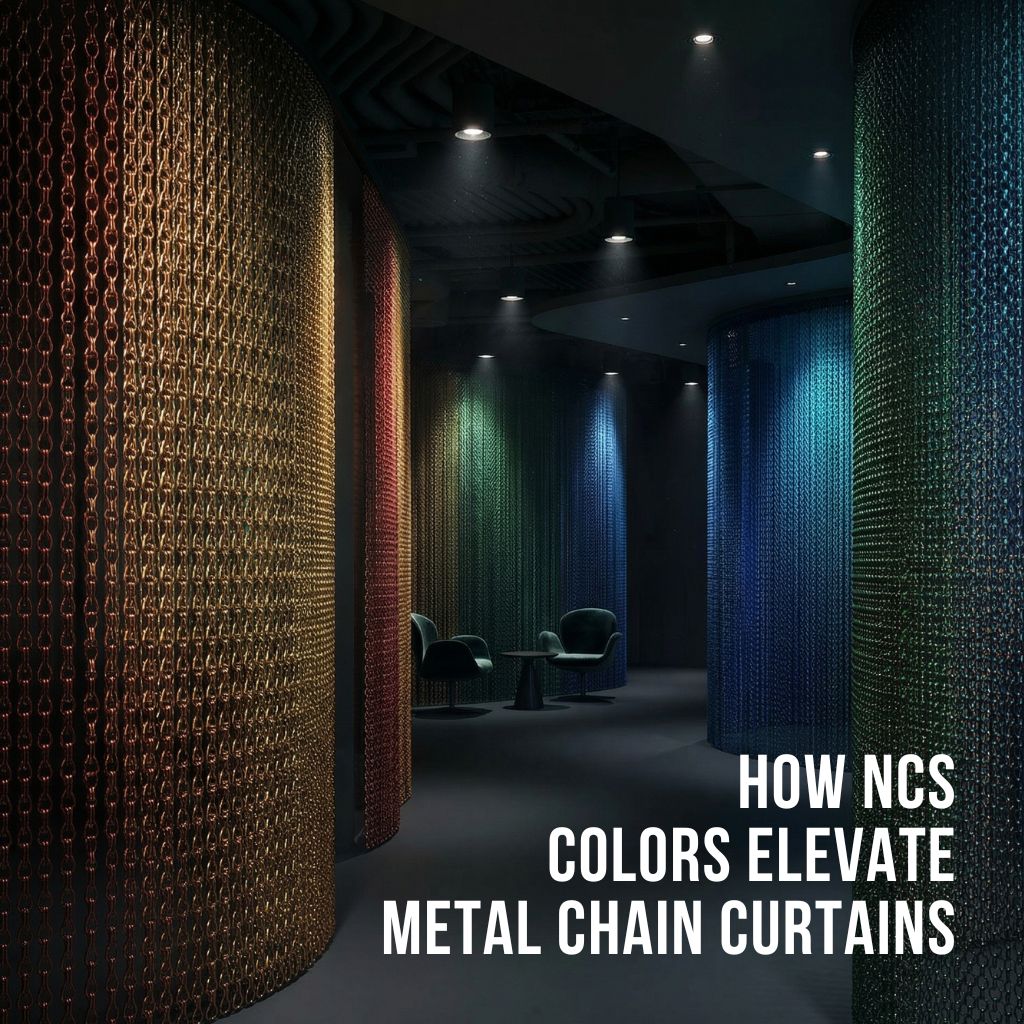
The NCS (Natural Color System) introduces a disciplined approach to color selection, enabling designers to align perception, material behavior, and spatial intent. When applied to systems such as:
- Aluchainor QKCLC Chain Link Curtain
- Aluchainor QKCLC Gradient Chain Link Curtain
- Decorion QKRMC Decorative Ring Mesh
1.Metal Curtains as Dynamic
Architectural Surfaces
Metal curtains are not static finishes they are responsive, kinetic surfaces that interact with airflow, movement, and light. This makes them uniquely expressive, yet complex to control.
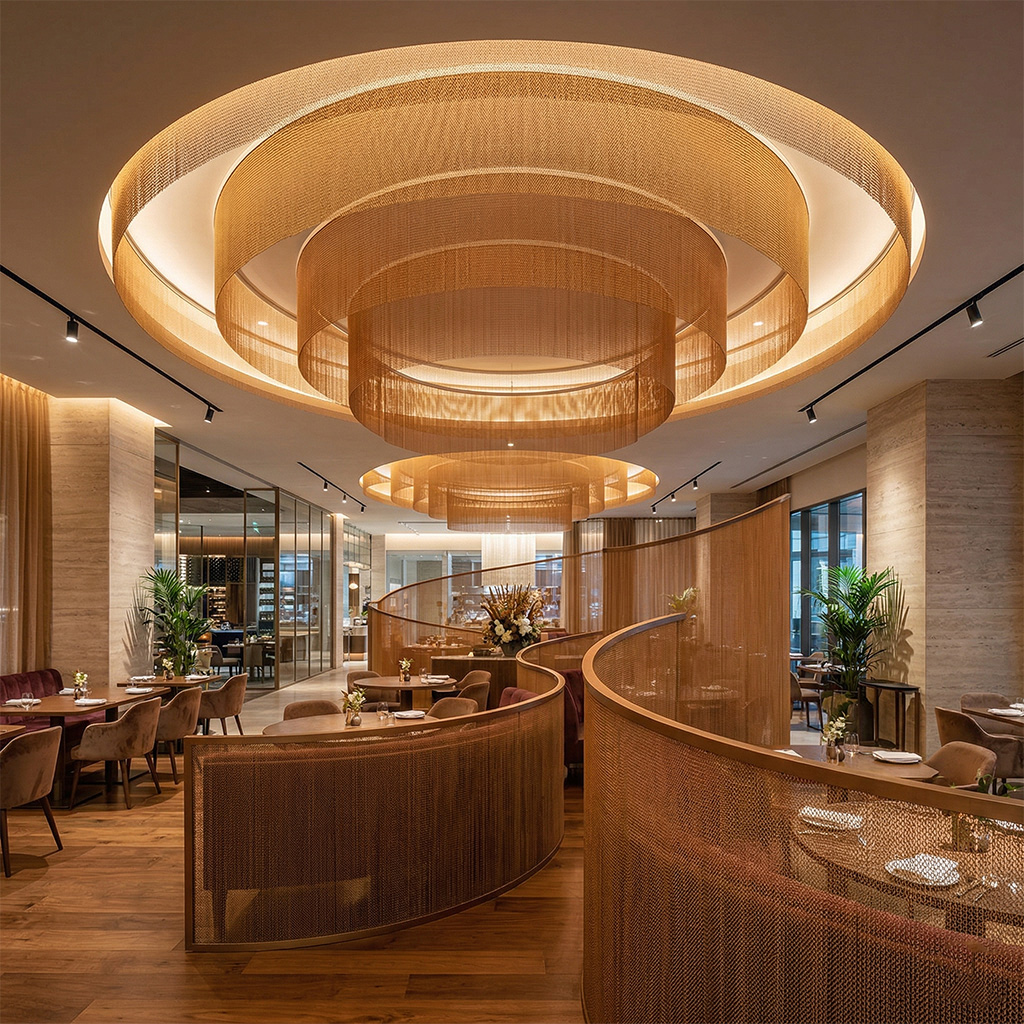
The Decorion QKRMC Decorative Ring Mesh, composed of precision-linked stainless or carbon steel rings, introduces a fabric-like drape with structural durability. Meanwhile, the Aluchainor QKCLC Chain Link Curtain, crafted from lightweight aluminum, enables semi-transparent spatial division without interrupting openness.
Without structured color planning, these systems can create excessive reflections and visual noise particularly in large commercial environments with layered lighting conditions.
NCS-based color selection ensures these surfaces remain visually balanced, allowing movement and reflection to enhance rather than disrupt the space.

2.NCS Color System: Structuring Visual
Consistency
The NCS system is grounded in human visual perception, defining colors through measurable relationships between blackness, whiteness, and chromatic intensity.
Applied to metal curtain systems, this enables:
- Consistent color application across large surfaces
- Seamless coordination with architectural finishes
- Controlled reflectance to minimize glare
For example, applying a muted NCS neutral to an aluminum chain curtain softens its reflective quality while preserving its metallic identity.
🔗 View Product
Â
3.Gradient Applications: Creating Movement Through Color
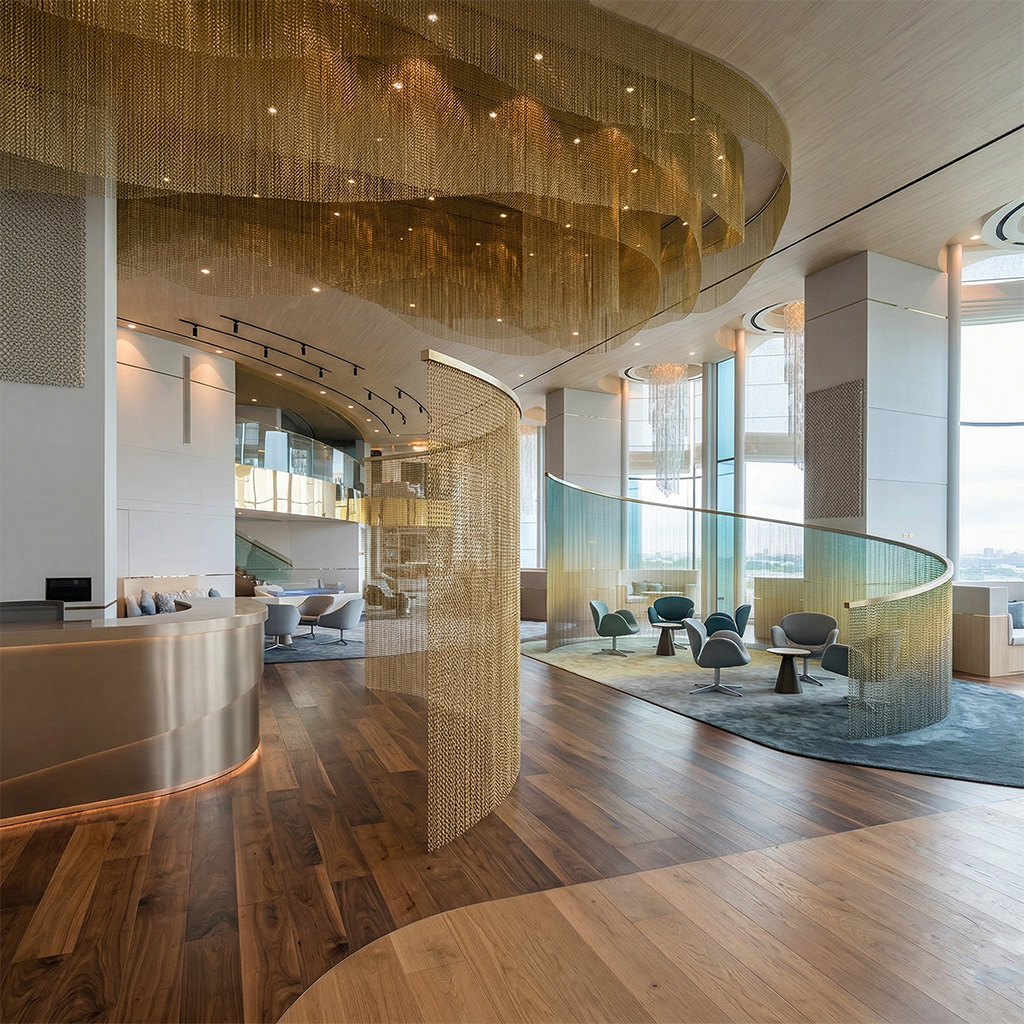
The Aluchainor QKCLC Gradient Chain Link Curtain introduces a dynamic layer through controlled color transitions.
Unlike uniform finishes, gradient applications allow designers to:
- Guide movement through visual flow
- Define zones without solid partitions
- Introduce depth within open layouts
Using NCS-based gradients ensures these transitions remain harmonious and intentional. Whether subtle or bold, the gradient becomes an architectural feature that evolves with light and movement.
🔗 View Product
4.Light Interaction and Visual Comfort
Metal curtains directly influence how light behaves within a space. Their color and finish determine whether light is diffused softly or reflected sharply.
The Decorion QKRMC ring mesh, with its interlinked structure, diffuses light more effectively than flat metal surfaces. When paired with NCS color strategies:
- Harsh reflections are reduced
- Light distribution becomes more even
- Spatial depth is enhanced through transparency
Darker tones absorb excess light, while lighter tones reflect it gently allowing designers to fine-tune the atmosphere based on function and context.
🔗 View Product
5.Versatile Applications Across Interior Typologies
Metal curtain systems offer exceptional adaptability across diverse environments:
- Aluchainor QKCLC Chain Link Curtain: Ideal for doorways, windows, and lightweight partitions
- Gradient Chain Link Curtain: Suitable for feature installations and spatial zoning
- Decorion QKRMC Decorative Ring Mesh: Perfect for ceilings, wall panels, facades, and sculptural elements
Each system supports customization in size, finish, and color, enabling precise alignment with project requirements.
When guided by NCS, these applications form a cohesive visual language that enhances both function and design clarity.
🔗 View Product
6.Material Expression and Brand Identity
In commercial interiors, color is a key component of brand identity. However, inconsistency across materials can weaken its impact.
NCS provides a structured framework for maintaining color integrity across:
- Metal curtain systems
- Architectural surfaces
- Interior elements and finishes
By applying NCS tones to metal curtains, designers can transform them into defining visual features—introducing movement, texture, and identity into the space.
Designing for Visual Balance
The success of any interior ultimately lies in how it is experienced. Spaces with uncontrolled reflections and inconsistent color application can feel overwhelming and disjointed.
By contrast, interiors designed with NCS precision offer:
- Visual clarity
- Balanced light interaction
- Enhanced spatial orientation
Metal chain curtains, when thoughtfully integrated, contribute to a refined sensory environment—introducing movement and texture without visual disruption.
Strategic Implementation
To effectively integrate NCS colors with metal chain curtains:
- Incorporate NCS early in the design phase for consistency
- Select tones based on lighting conditions to control reflectance
- Use gradients strategically to guide spatial flow
- Test materials under real lighting environments
- Utilize customization options for precise project alignment
- Maintain balance between aesthetics and performance
A Cohesive Language of Color and Material
As commercial interior design evolves, the integration of color and material becomes increasingly critical. Metal chain curtains whether aluminum link systems or decorative ring mesh offer a unique opportunity to combine transparency, movement, and structure.
When guided by the precision of NCS color systems, these elements transcend decoration. They become tools for spatial articulation and visual control.
The result is an interior that is not only visually compelling, but also thoughtfully composed where every detail contributes to a cohesive, sophisticated architectural experience.