

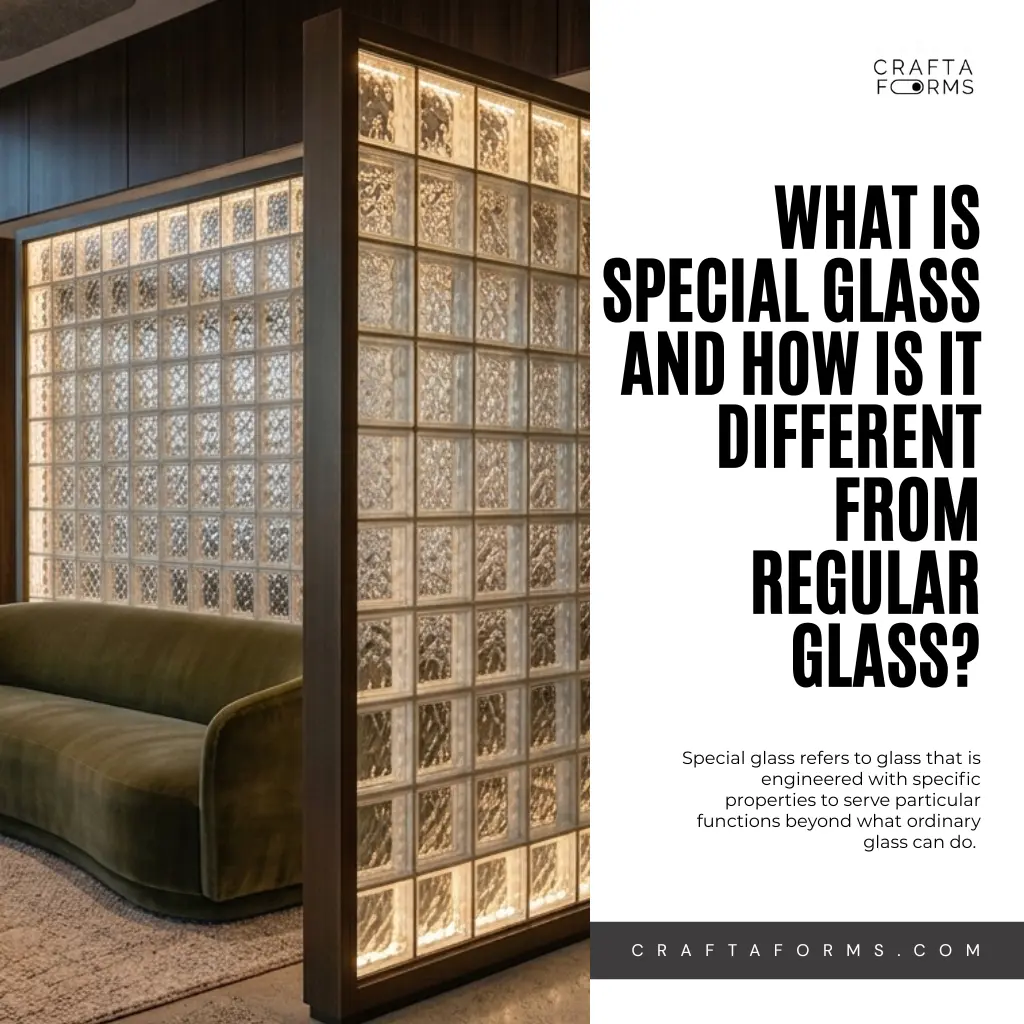
What Is Special Glass and How Is It Different from Regular Glass?
Glass has been a fundamental material in construction and interior design for centuries. From simple window panes to advanced architectural features, its role has evolved significantly. Today, the concept of special glass has taken center stage, offering enhanced functionality, aesthetics, and performance compared to traditional glass.
Understanding what makes special glass different from regular glass can help homeowners, architects, and designers make better choices for modern spaces.
Understanding Regular Glass
Manufacturers commonly refer to regular material as the standard or float type, and they use it as the most basic option for windows and simple applications.It is usually clear, flat, and mainly intended for visibility and allowing light to pass through.
However, it does have some limitations. It provides minimal insulation, has relatively low strength, and offers limited design versatility. It is also more likely to break under stress compared to more advanced alternatives.
What Is Special Glass?
Manufacturers engineer or treat this category to provide additional benefits beyond basic transparency.These enhancements may include improved strength, safety, insulation, decorative appeal, or specific functional properties.
It is widely used in modern architecture and interiors to meet both aesthetic and practical requirements. Whether for safety, privacy, or design innovation, it offers solutions that go far beyond what regular glass can achieve.
Key Differences Between Special and Regular Glass
The primary difference lies in performance and versatility. Regular material is simple and functional, while other advanced types are designed to meet specific needs.
These advanced options can be stronger, more energy-efficient, and more visually appealing. They often undergo processes such as tempering, laminating, or coating to improve their properties.
In contrast, regular material lacks these enhancements, making it less suitable for more demanding or specialized applications.
Enhanced Strength and Safety
One of the most important features of special glass is its strength. Types such as tempered and laminated glass are designed to withstand impact and reduce the risk of injury.
When broken, they shatter into small, less harmful pieces or remain held together by a layer, making them safer for use in homes and commercial spaces.
This makes special glass ideal for areas where safety is a priority, such as doors, partitions, and large windows.
Improved Energy Efficiency
Special glass often includes coatings or layers that improve thermal insulation. This helps maintain indoor temperatures and reduces energy consumption.
By minimizing heat transfer, it contributes to more comfortable living and working environments.
This feature is particularly valuable in regions with extreme climates, where energy efficiency is essential.

Aesthetic and Decorative Appeal
Unlike regular material, advanced types offer a wide range of design possibilities. They can be customized with patterns, colors, and textures to suit different styles.
For example, textured surfaces add visual interest while providing privacy, making them a popular choice for both residential and commercial interiors.
Decorative options allow designers to create unique and visually striking spaces.
Privacy without Compromising Light
Special glass can provide privacy while still allowing natural light to pass through.Various treatments such as frosting, tinting, or texturing achieve this.
This feature proves particularly useful in bathrooms, offices, and partitions, where people need privacy without sacrificing brightness.
In contrast, regular glass offers little to no privacy unless users add extra coverings.
Versatility in Applications
Special glass is used in a wide range of applications, from windows and doors to partitions and decorative features.
For instance, a Glass Block Wall can serve as both a structural and design element, allowing light to pass through while maintaining separation between spaces.
Similarly, an Interior Glass Block can be used to create stylish partitions or feature walls.
This versatility makes special glass a preferred choice for modern design projects.
Artistic and Creative Uses
Special glass is not just functional—it is also a medium for artistic expression. Designers and architects use it to create unique visual effects and statement pieces.
Artistic Glass can be used in feature walls, decorative panels, and custom installations, adding a touch of creativity and elegance to any space.
This level of design freedom is not possible with regular glass.
Durability and Long-Term Performance
Special glass is designed to last longer and perform better under various conditions. It is more resistant to scratches, weather, and wear and tear.
This durability makes it a cost-effective option in the long run, as it reduces the need for frequent replacements or repairs.
Regular glass, while affordable initially, may not offer the same level of longevity.
Maintenance and Cleaning
Despite its advanced features, special glass is generally easy to maintain. Most types require simple cleaning with standard solutions.
Some varieties even include coatings that resist dirt and stains, making maintenance even easier.
This combination of performance and convenience adds to its appeal.

Why Choose Special Glass?
Choosing the right material over standard options depends on your needs and priorities. If you are looking for enhanced safety, energy efficiency, and design flexibility, advanced alternatives are the better choice.
They allow you to create spaces that are not only functional but also visually appealing.
Investing in high-quality solutions can significantly improve the overall value and comfort of your property.
Advanced Glass Solutions
Crafta Forms is known for offering innovative solutions tailored to modern design needs. Their range of products includes various advanced materials designed for both functionality and aesthetics.
With a focus on quality and customization, they help clients achieve unique and impactful designs.
Their expertise ensures that every project meets the highest standards of performance and style.
Final Thoughts
This material represents a significant advancement over traditional options. It combines strength, efficiency, and design versatility to meet the demands of modern architecture and interiors.
From enhanced safety to artistic applications, it offers benefits that go far beyond basic functionality.
By understanding the differences between advanced and standard materials, you can make informed decisions and create spaces that are both beautiful and practical.
- FAQ
1. What is special glass?
It is glass that has been enhanced with additional properties such as strength, insulation, or decorative features.
2. How is it different from regular glass?
It offers better performance, durability, and design options.
3. Is special glass more expensive?
It can be, but it provides better long-term value.
4. Can special glass be used in interiors?
Yes, it is widely used for partitions, walls, and decorative elements.
5. Is it easy to maintain?
Yes, most types are easy to clean and maintain.
6. Why should I choose special glass?
It enhances safety, efficiency, and aesthetics in modern spaces.