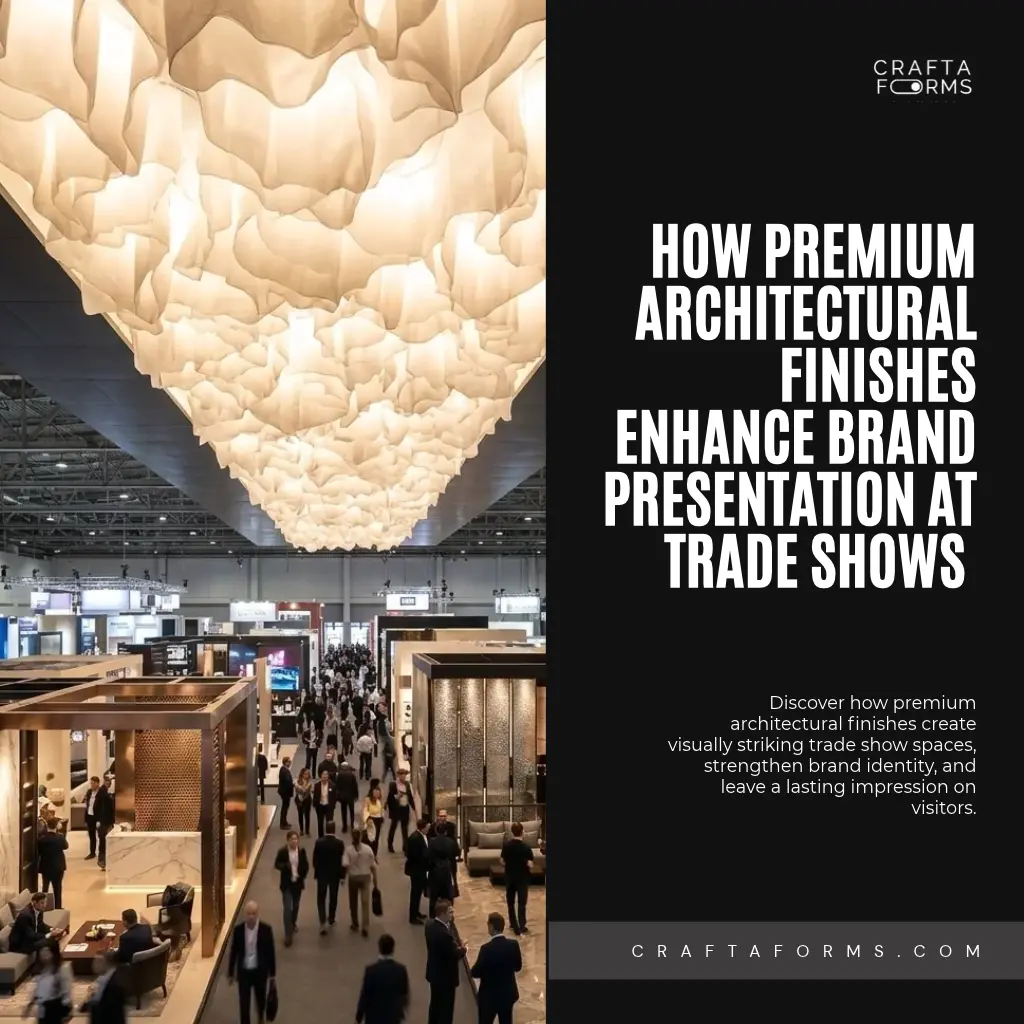
How Premium Architectural Finishes Enhance Brand Presentation at Trade Shows
A trade show is more than just a place to display products. It is an opportunity for a brand to introduce itself, connect with potential customers and leave a lasting impression. With so many businesses competing for attention, creating an exhibition space that visitors remember has become increasingly important.
While branding, graphics and product displays all play a role, the materials used in the space can make just as much of a difference. The right combination of textures, colours and finishes can turn a simple exhibition booth into an environment that reflects a brand’s personality and quality.
This is where premium architectural finishes come in. Materials such as decorative metal, textured glass, 3D wall panels and acoustic finishes give designers more freedom to create interesting and functional spaces.
At Crafta Forms, we understand how much the choice of material can influence the final appearance of an interior. Whether it is a decorative feature wall, a glass partition or a carefully selected metal finish, every material brings something different to a design.
Let’s look at how premium architectural finishes can help businesses create a stronger brand presence at trade shows.
Why Architectural Finishes Matter at Trade Shows
Think about the last time you walked through a busy exhibition. Some booths probably caught your attention immediately, while others blended into the background.
What makes the difference?
It is often the way the space is designed. The materials, lighting, colours and overall layout work together to create a particular impression.
For example, a technology company might use glass and metallic finishes to create a clean, contemporary look. A luxury furniture brand might choose textured wall panels and warm decorative surfaces to create a more welcoming atmosphere.
These design choices help communicate what a brand stands for before a visitor even speaks to its team.
Well-chosen architectural finishes can help:
- Make an exhibition booth visually different from surrounding displays.
- Reflect the brand’s identity through colours, textures and materials.
- Create attractive backgrounds for products and presentations.
- Make the space feel more professional and thoughtfully designed.
- Improve the overall experience for visitors.
The important thing is to choose materials that support the brand’s message rather than using decorative elements simply to fill the space.
6 Ways Premium Architectural Finishes Can Improve Exhibition Booth Design
1. Give Your Exhibition Space More Character with Decorative Wall Finishes
Walls are often one of the first things visitors notice when approaching an exhibition booth. A plain wall may serve its purpose, but it doesn’t always create the visual impact a brand is looking for.
Decorative wall finishes offer a way to add character without making the design overly complicated.
3D wall tiles, textured panels and decorative cement blocks can introduce patterns, depth and interesting surface details. They also provide an attractive background for product displays, reception counters and brand messaging.
Imagine a furniture brand displaying its latest collection against a geometric 3D wall. The textured surface adds depth to the display and makes the products stand out without taking attention away from them.
At Crafta Forms, our wall solutions offer different textures and design possibilities that architects and interior designers can explore when creating distinctive commercial spaces.
2. Make a Statement with Decorative Metal Finishes
Metal finishes have a way of bringing a contemporary and sophisticated feel to an interior. They can be bold or subtle, depending on the finish, pattern and how they are used.
In exhibition design, decorative metal materials can be used for much more than simple surface detailing.
Metal mesh, chain curtains and metal drapery can work particularly well as feature backdrops, decorative partitions and suspended elements.
For example, a luxury automotive brand could use a decorative metal backdrop behind its main display. With the right lighting, the metal surface can create depth and reflections that complement the overall design.
Some practical ways to use decorative metal finishes include:
- Creating feature walls behind reception counters.
- Separating different sections of an exhibition booth.
- Adding texture to product display backgrounds.
- Introducing decorative elements that interact with exhibition lighting.
- Creating visual interest without completely closing off a space.
The choice of metal finish matters too. Different patterns, colours and surface treatments can produce very different results.
3. Use Decorative Glass to Create an Open and Elegant Space
Glass is a popular choice in contemporary interiors, and it has plenty of potential in exhibition design as well.
One of its biggest advantages is that it can divide a space without making it feel closed. This is particularly useful for exhibition booths that need separate meeting areas, consultation spaces or product display sections.
Different types of decorative glass also offer different visual effects.
For instance:
- Fluted glass introduces texture while providing a degree of visual privacy.
- Decorative glass blocks can be used to create distinctive feature walls.
- Frosted glass works well for semi-private meeting areas.
- Laminated mesh glass combines glass with decorative mesh for a distinctive architectural appearance.
Consider a company exhibiting its services at a business trade show. It could use fluted glass partitions to create a small meeting area while keeping the overall booth open and connected.
At Crafta Forms, our glass solutions offer designers different ways to work with transparency, texture and light.
4. Don’t Overlook the Ceiling
When planning an exhibition booth, most of the attention usually goes to the walls, flooring and product displays. But the ceiling can also make a significant difference.
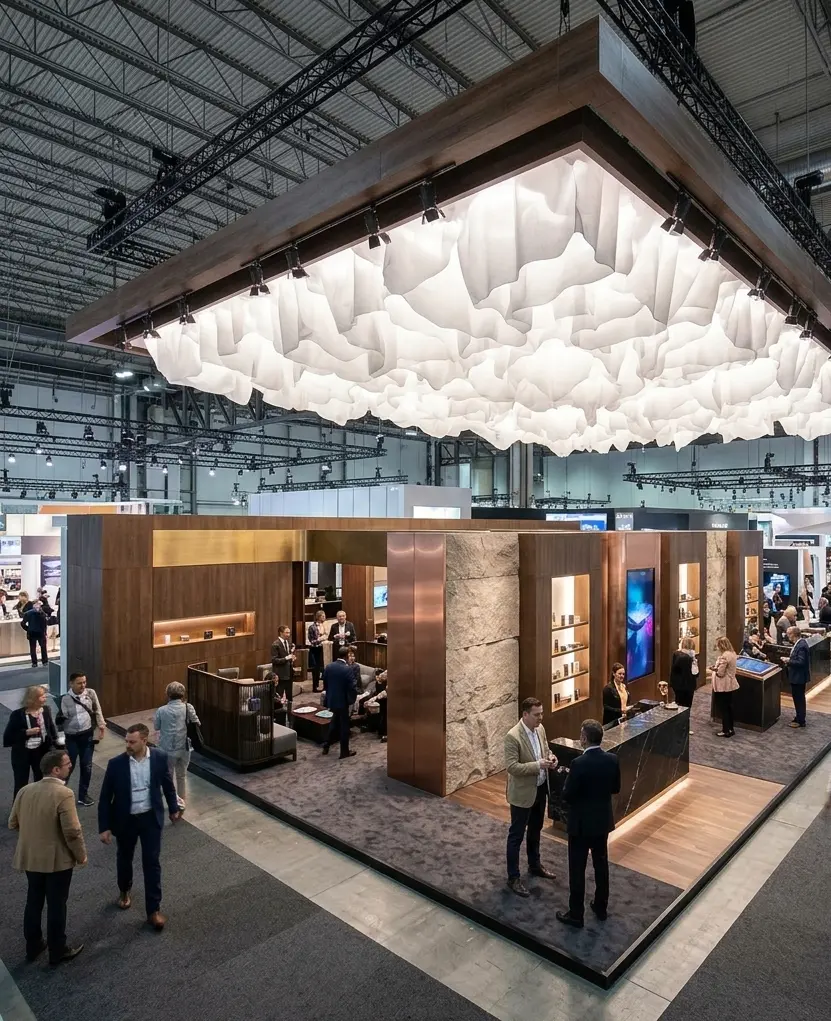
A well-designed ceiling helps bring the entire space together. Decorative ceiling finishes, suspended features and carefully planned lighting can make even a relatively simple booth look more complete.
For example, a hospitality brand could use warm lighting with decorative ceiling elements to create an atmosphere that reflects the look and feel of its hotels or resorts.
The design should also take practical considerations into account, including ceiling height, installation methods, venue restrictions and material safety requirements.
5. Bring Warmth into the Design with Rattan Finishes
Not every exhibition space needs a glossy or metallic appearance. Some brands want a more natural, relaxed and welcoming feel.
This is where woven textures can work beautifully.
Synthetic rattan panels introduce warmth and visual interest through their distinctive patterns. They can be used for selected wall sections, decorative backdrops and other suitable interior applications.
A furniture or hospitality brand, for example, could incorporate rattan panels into its exhibition booth to create a setting that feels more connected to nature.
Rattan also works well alongside other materials. Pairing it with glass, metal or wood-look finishes can create an interesting contrast between natural textures and contemporary design.
The key is balance. A carefully selected feature can often have more impact than using the same texture throughout the entire booth.
6. Make Exhibition Spaces More Comfortable with Acoustic Solutions
Exhibitions can get noisy, especially when several brands are conducting presentations and product demonstrations in the same hall.
This can make it difficult for visitors to have conversations or concentrate during meetings.
Acoustic panels are worth considering when designing enclosed or semi-enclosed exhibition areas. They can help manage sound reflections and reduce unwanted echo, depending on the product and installation.
They also offer decorative possibilities. Rather than treating acoustic materials as purely functional products, designers can use different colours, patterns and finishes to make them part of the interior design.
For example, a company that regularly conducts presentations at trade shows could incorporate acoustic panels into its meeting area to create a more comfortable environment.
Combining Different Materials for a Better Exhibition Design
Using premium materials doesn’t mean using every available finish in one space. In fact, some of the most attractive exhibition designs are built around just two or three complementary materials.
The idea is to create a balance between textures, colours and surfaces.
Here are a few combinations worth exploring.
Metal and Glass for a Contemporary Look
Metal and glass work naturally well together. Metal adds structure and definition, while glass keeps the space feeling open.
This combination is particularly suitable for technology brands, automotive companies and businesses looking for a modern, premium appearance.
Rattan and Wood-Look Finishes for a Natural Feel
For brands in hospitality, furniture and lifestyle industries, warmer materials can create a more inviting atmosphere.
Woven rattan textures paired with wood-look finishes can help achieve this without making the space feel overly decorative.
Textured Wall Panels with Lighting
A textured wall can look completely different depending on how it is illuminated.
Positioned lighting can highlight patterns, create shadows and bring out the details of 3D wall panels. This makes the combination particularly useful for feature walls and product display areas.
Acoustic Panels with Decorative Metal Details
Acoustic panels can be paired with metallic accents to create meeting spaces that balance appearance and functionality.
This is a practical option for exhibition booths where presentations, consultations and business discussions are an important part of the visitor experience.
How to Choose the Right Architectural Finishes for Your Exhibition Booth
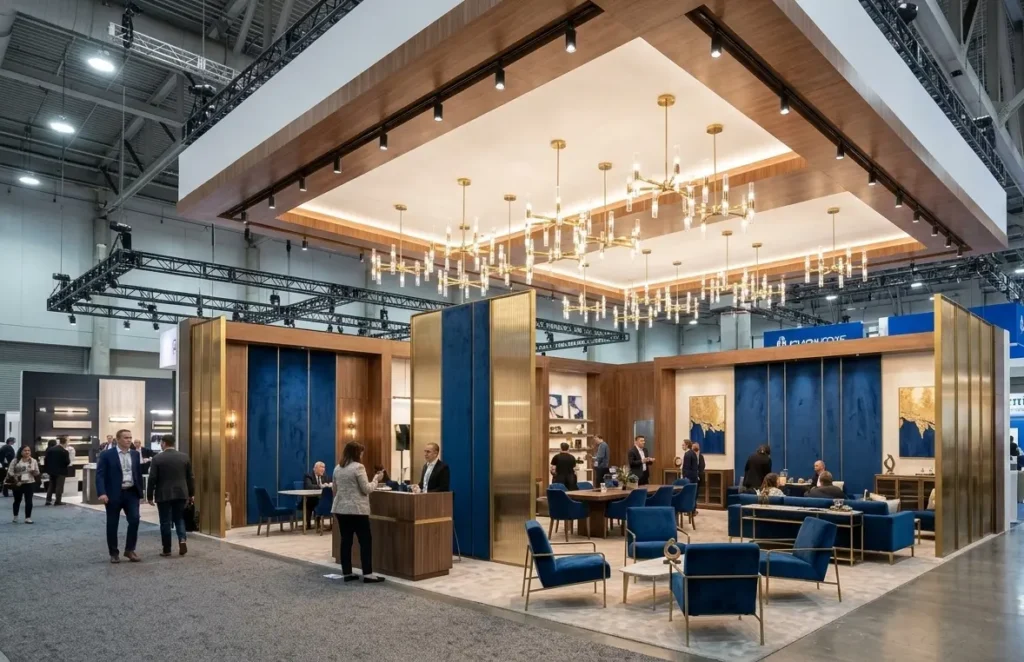
Choosing materials is not just about finding something that looks attractive. The selected finishes should work with the overall design, suit the brand and meet the practical needs of the exhibition.
Before making a decision, consider a few important points.
Start with the Brand’s Identity
Every brand has its own personality. Some want to look luxurious and sophisticated, while others prefer a clean, minimal or creative appearance.
The materials should reflect that identity.
For example, decorative metal and glass may suit a technology company, while rattan and textured finishes might work better for a lifestyle brand.
Consider Durability and Reusability
Exhibition materials often go through transportation, installation and dismantling. If the booth is going to be reused at different events, durability becomes particularly important.
Consider the material specifications, maintenance requirements and how easily the finishes can be handled and installed.
Think About Lighting
A material that looks attractive in a showroom may appear different under exhibition lighting.
Reflective metal surfaces, textured glass and 3D wall panels all interact with light in different ways.
Whenever possible, consider the actual lighting conditions when finalising your material selection.
Check Installation Requirements
Exhibition venues often have specific rules regarding fire safety, structural support, fixing systems and installation methods.
These requirements should be checked before selecting materials. Weight, dimensions and transportation also need to be considered, particularly for temporary exhibition structures.
Make the Most of Your Budget
You don’t need premium finishes on every surface to create a high-quality exhibition booth.
A more practical approach is to identify the areas visitors are most likely to notice. This could be the reception backdrop, a feature wall or the main product display.
Investing in these areas can create a stronger visual impact while keeping the overall project within budget.
Creating an Exhibition Space That Visitors Remember
A successful exhibition booth should do more than attract attention from a distance. It should give visitors a reason to step inside, explore the display and engage with the brand.
This is where thoughtful material selection makes a difference.
A decorative metal screen can create an interesting entrance. A textured wall can provide a memorable backdrop. A glass partition can define a meeting area without making it feel disconnected from the rest of the booth.
Individually, these details may seem small. But when they work together, they help create a consistent and recognisable brand environment.
For architects, interior designers and exhibition professionals, understanding how different materials complement one another is an important part of the design process.
Rather than following every new design trend, focus on choosing finishes that suit the brand, serve a purpose and contribute to the overall experience.
Explore Architectural Finish Solutions at Crafta Forms
At Crafta Forms, we believe the right materials can make a real difference to how a space looks and feels.
Our collections bring together a range of architectural finishes that give designers more options when planning commercial interiors, hospitality spaces and distinctive exhibition environments.
Our product categories include:
- Metal Solutions: Decorative metal mesh, chain curtains, metal drapery and other architectural finishes.
- Glass Solutions: Fluted glass, decorative glass blocks and textured glass options.
- Wall Solutions: 3D wall tiles, decorative wall surfaces and cement blocks.
- Ceiling Solutions: Decorative materials for contemporary ceiling applications.
- Rattan Solutions: Synthetic rattan panels in different patterns and textures.
- Acoustic Solutions: Decorative acoustic panels that combine visual appeal with sound applications.
We understand that every project has different requirements. That’s why exploring the right material, finish and application is an important starting point for any design.
Whether you are planning an exhibition booth, developing a commercial interior or looking for a distinctive architectural feature, explore the Crafta Forms collection to find materials that bring your ideas to life.
- FAQ
Why are architectural finishes important in exhibition booth design?
Architectural finishes help create the overall look and feel of an exhibition booth. They add texture, depth and character while helping a brand communicate its identity. The right materials can make a booth more attractive, professional and memorable for visitors
Which materials are suitable for premium exhibition stands?
Decorative metal mesh, fluted glass, laminated mesh glass, 3D wall panels, synthetic rattan and acoustic panels are some options worth considering. The right choice depends on the brand’s design direction, budget, installation requirements and the intended use of the booth.
How can decorative metal finishes improve an exhibition booth?
Decorative metal finishes add structure, texture and visual interest. Materials such as metal mesh, chain curtains and metal drapery can be used for feature walls, partitions and display backgrounds. When combined with suitable lighting, they can create an attractive contemporary appearance.
Can decorative glass be used in exhibition booths?
Yes. Decorative glass can be used for partitions, feature walls and meeting areas. Fluted and frosted glass are particularly useful when some visual privacy is needed without completely closing off the space. The selected glass should meet the relevant safety and installation requirements.
How do I select the right finishes for an exhibition project?
Start with the brand’s identity and the overall design concept. Then consider the space, lighting, material performance, installation requirements and budget. Combining a few complementary materials is often a better approach than using too many different finishes. Working with an experienced architectural materials supplier can also help you identify suitable options.