Riverfold vs Natural Rattan: Why HDPEWoven Panels Are Easier to Maintain
Rattan is having a moment, and it’s easy to see why. A woven wall brings warmth to a hotel lobby, softens an office reception and makes a restaurant feel relaxed the second you walk in. The catch is what happens after the installers leave. Who looks after it, and how much work is it?
That’s what we want to answer here. We’ll compare natural rattan with the Riverfold Synthetic Rattan Panel (RATTANA-CFRFSRP) and show where woven HDPE saves you time. If you’re weighing up synthetic rattan wall panels for a feature wall or a commercial space, this should help you decide.
Natural Rattan: Lovely, but It's a Plant
Natural rattan is a plant fibre, so it behaves like one. It takes in moisture from the air and gives it back again. That’s part of its charm, and it’s also why it can be fussy. In a well-ventilated room with steady humidity, it can look great for years. Real projects don’t always give you that, especially commercial ones.
What Is the Riverfold Synthetic Rattan Panel?
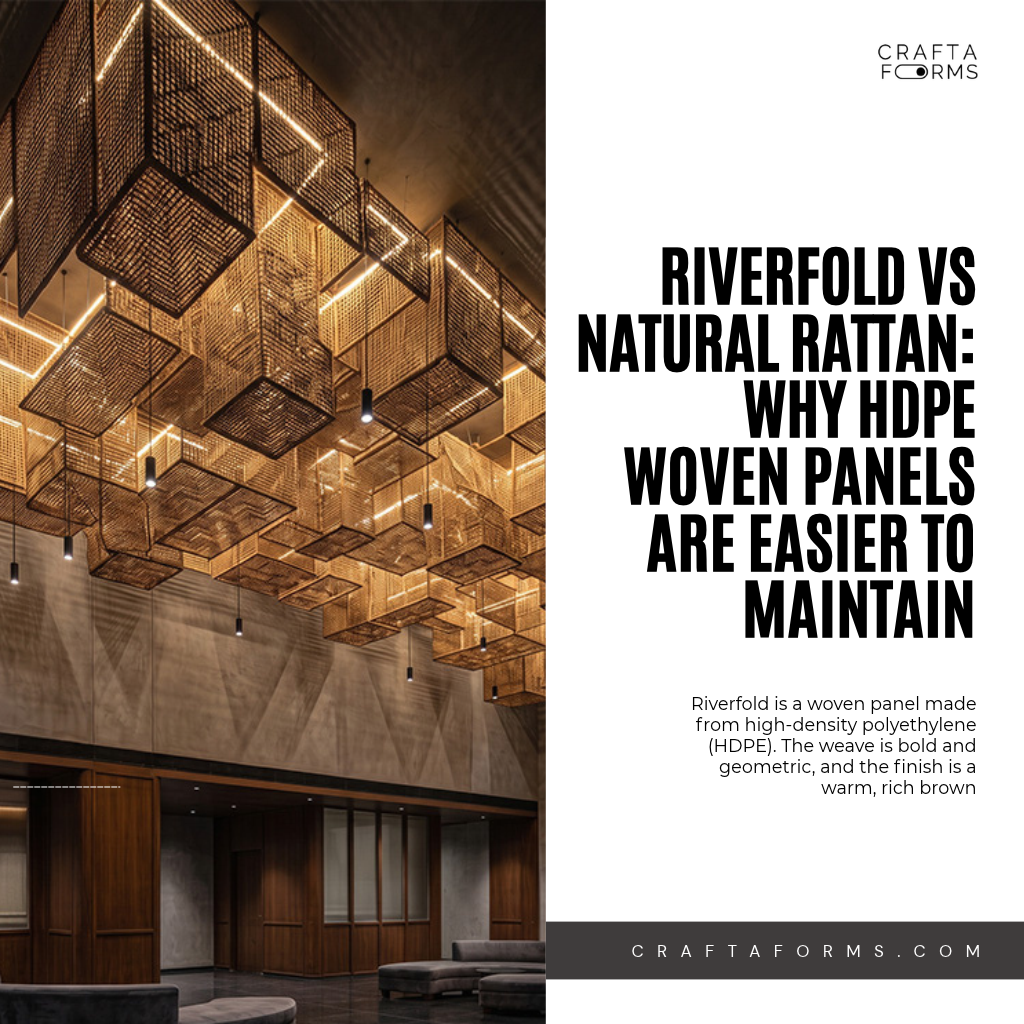
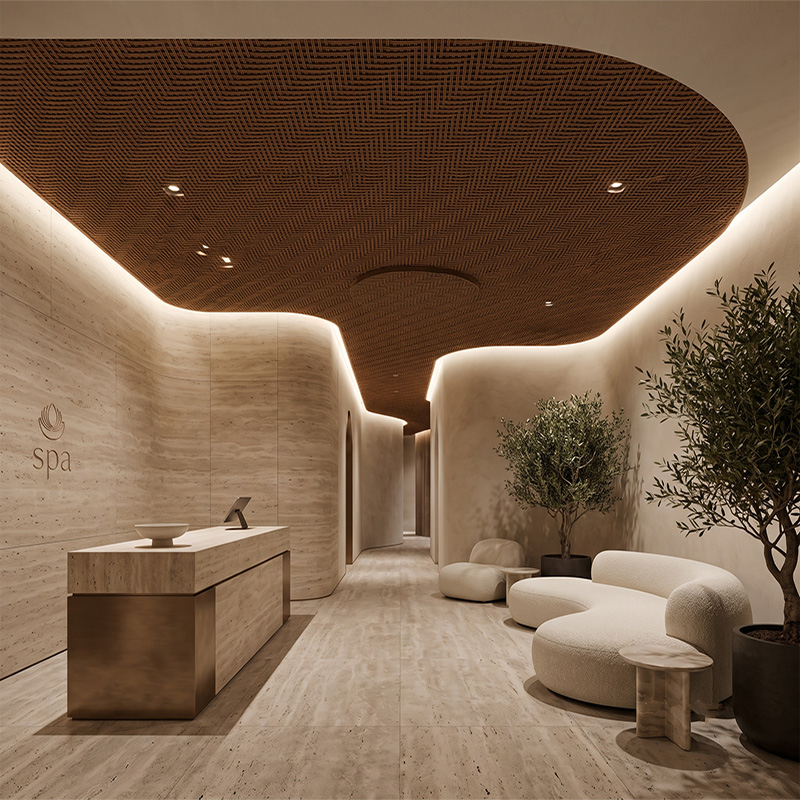
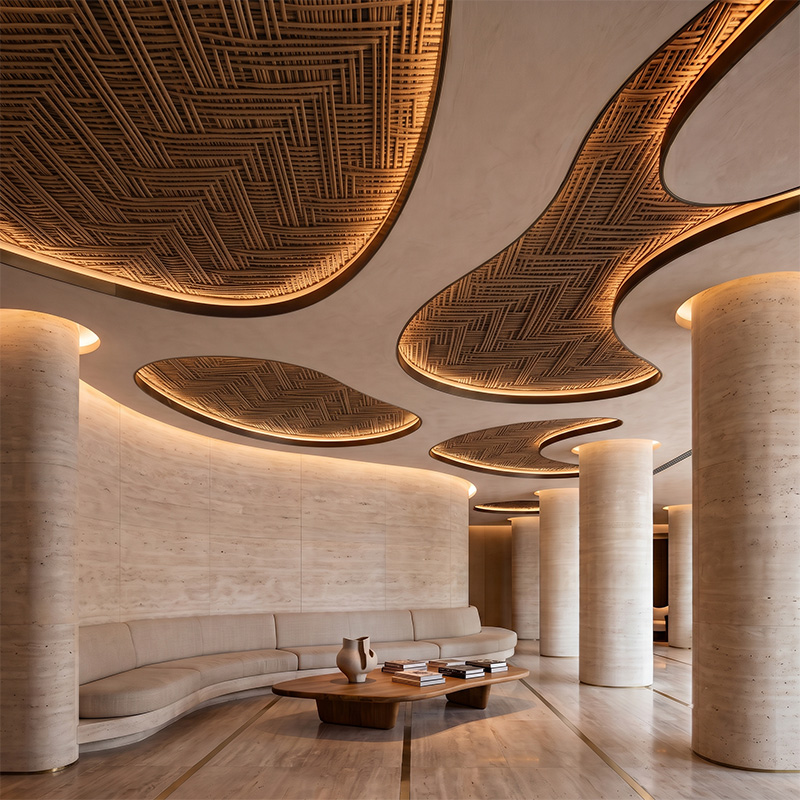
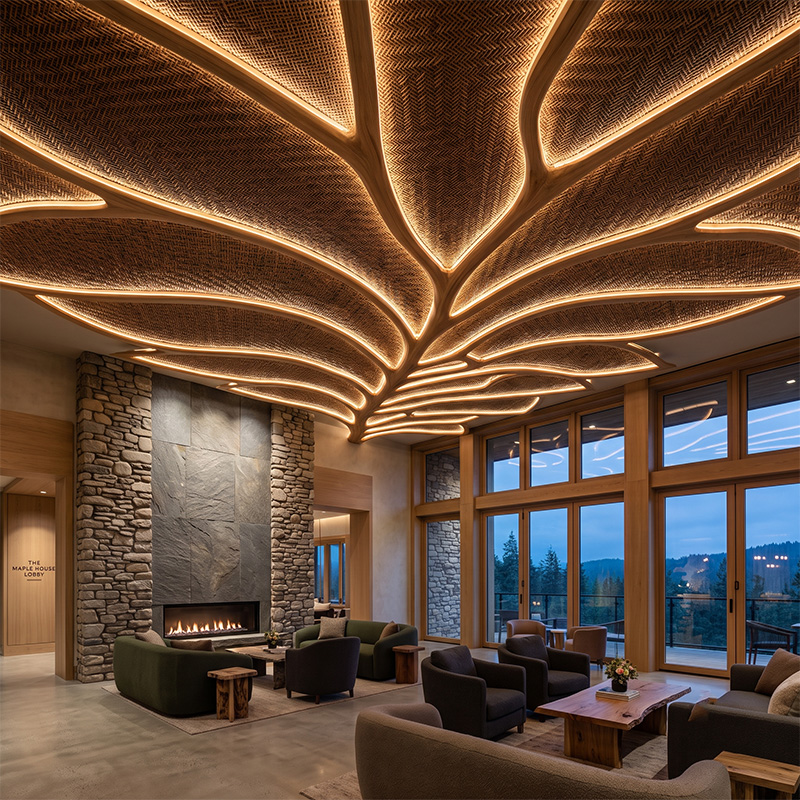
Riverfold is a woven panel made from high-density polyethylene (HDPE). The weave is bold and geometric, and the finish is a warm, rich brown. Use it for rattan wall panels, feature walls, decorative screens and wall cladding in homes, hotels, restaurants, offices and shops. It comes in custom sizes, up to 1.5 m wide and 5.5 m long, and in brown, yellow, green, red, grey and dark brown, plus custom colours.
Where Natural Rattan Asks for Extra Care
None of this is a reason to write natural rattan off. It just helps to know what you’re signing up for: • Damp and mould. Natural fibre can hold moisture. If it stays damp in the weave, mould can follow, especially in humid or poorly ventilated rooms. • Drying out. If the fibre dries too fast or too much, it turns brittle and can crack. Strong air-conditioning airflow and harsh light don’t help. • Sagging. Humidity over a long period can soften the weave and loosen it. • Finishing. Many natural pieces rely on a sealed or varnished surface, and some need oiling or re-sealing every so often.
• Sun. Strong direct sunlight can dry the fibre and fade the colour.
If you’ve got the right space and you’re happy to do the upkeep, that’s fine. In a busy hotel or shop, it’s a lot to ask.
Why HDPE Woven Panels Are Easier to Look After
Synthetic rattan is made from engineered polymer strands instead of plant fibre. That changes day-to-day life quite a bit. It Doesn’t Soak Up Moisture HDPE is a plastic, so water doesn’t sink in the way it does with plant fibre. That makes synthetic rattan far less likely to swell, sag or grow mould, which are the usual headaches with natural rattan. Cleaning Takes Minutes Wipe Riverfold clean with mild detergent and a soft cloth. That’s it. No oiling, no waxing, no re-sealing schedule. Just keep harsh acids and solvents away, because they can damage the surface. Colour and Texture Stay Even The colour runs through the strand, so there’s no stain or varnish to wear off. Synthetic strands are also made to a consistent standard, so a large wall looks uniform. Natural rattan varies from piece to piece. Some designers love that. Others find it a pain to match across a big project. Custom Sizes Mean Fewer Joins Natural weaving is limited by fibre length and by what a weaver can make by hand. Riverfold goes up to 1.5 m by 5.5 m, with custom sizes on request, so large feature walls and screens can have fewer joins. Do confirm your dimensions before ordering.
There’s a Fire-Retardant Option If you’re working on a hotel, shop or office, you’ll probably get asked about fire safety. A fire-retardant option is available on request. Check the rating your project needs before you order.
What About Sunlight and Outdoor Use?
Synthetic rattan generally copes with humidity and temperature changes better than natural rattan. But no material is completely sun-proof, and prolonged direct sunlight can fade most things over time. The wider Rattan Solutions collection is described as suitable for indoor and outdoor use, while the Riverfold page focuses on interiors. So if you’re planning an exterior, ask the CraftaForms team before you specify it.
When Natural Rattan Is Still the Better Pick
It has its place, and we’d be the first to say so. Go natural if: • You love the look of real plant fibre and its small irregularities. • The space is indoors, with good airflow and steady humidity. • You don’t mind a simple care routine.
If your priorities are low maintenance, an even colour, custom sizes and heavy daily use, Riverfold is usually the safer bet.
Where Riverfold Works Best
Riverfold suits plenty of interior projects, including: • Feature walls and wall cladding in homes • Hotel, restaurant and hospitality interiors • Office walls and reception areas • Decorative screens and room dividers • Retail shops, showrooms and boutiques Want a different look? The Rattan Solutions range also includes diamond, diagonal, herringbone and sunflower weaves.
How to Choose the Right Panel
Before you order, run through this quick list: • The size and thickness you need for the wall or screen • The colour that suits your palette, or a custom colour • Whether you need a fire-retardant option • Whether the panel is going indoors or outdoors • How it will be fixed, since installation depends on the project and the fixing method It’s also worth reading the files in the downloads section of the product page for more detail.
Talk to CraftaForms
We’re happy to give free advice on sizes, materials and custom finishes before you order. Planning a bulk order or something custom? Email us at ask@craftaforms.com and we’ll help you work out the options.